
After an initial meeting, I take sufficient time to conduct a free quick analysis. I want to understand where the problem lies. Afterwards, you can get a more accurate picture.
I can then prepare a tailored offer for my support. My services range from comprehensive company analysis and due diligence (or just specific areas such as finance, human resources, administration, production, warehousing, logistics or other processes) to specialised areas such as fraud detection and the actual implementation of proposals. This sets me apart from a consultant, and you will see that I don’t just spout empty words, but take full responsibility.
My proposals are practical, realistic and concrete.

Financial management in companies is one of my core competencies. As a CFO in companies across a wide range of industries, cash flow is second nature to me. Industry experience is not decisive in determining whether an interim manager can provide the necessary impetus. It is much more about the speed with which one can understand the business model. And experience makes this possible.
You don’t need an army of KPIs or PowerPoint presentations with brightly coloured graphs. Your cash flow tells you everything you need to know.
Cash is the lifeblood of every company, regardless of the industry.
The CFO is the company’s internist, cardiologist and angiologist all rolled into one. He knows all the processes and procedures in the company, knows who pumps the blood into the circulatory system, constantly measures blood pressure and heart rate, detects any circulatory disorders at an early stage and recommends medication to restore health. In a healthy circulation, he distributes nutrients efficiently and according to need; in the event of a crisis, he is able to procure the necessary reserves and administer them in the right amounts.

Just like a doctor who has treated a large number of patients over the course of their career, the advantage of an interim CFO is their experience with different companies in a wide variety of industries. This results in a mosaic that protects the CFO from operational and industry blindness and gives them a helicopter view of a wide range of challenges.
With decades of experience as a CFO and interim CFO, I can manage your finances effectively and efficiently. With my professional expertise, I can help you manage operational crises, initiate a turnaround and ultimately restructure your company and put it on the road to success.


(Good) people management in itself is a particular challenge that requires a great deal of empathy, experience and the right personal values.
(Bernard de Clairvaux)
These requirements are magnified in cross-cultural and cross-border people management. In my personal experience, there are interpersonal barriers in an international environment that should not be underestimated. These barriers are often invisible, but they have an enormous negative impact on a company’s performance.
I have identified and removed such barriers many times. I have particular experience in relations between Czech companies and companies from Austria, Germany and Switzerland.
Managing a company or department is largely about managing people. A leader who succumbs to micromanagement and believes they have to do everything themselves is not fit for purpose.
Micromanagement is a sign of a lack of trust in the team or a lack of trust in oneself, i.e. a sign of a lack of self-confidence. An experienced interim manager is unfamiliar with both. They trust themselves and their leadership skills, and above all, they do not fear competition from within their own ranks. On the contrary, they seek out the best people in the company, lead, promote and manage them… People management.
People management requires experience and skill in itself. This requirement is magnified in an international and intercultural environment. If the challenges are underestimated, this will inevitably have an impact on the company’s performance.


My more than 25 years of experience as a top manager in Czechia have sensitised me to this issue and made me a professional. One might think that between countries that are so similar both historically and in their general way of thinking, there can be no clashes or misunderstandings. But I have been proven wrong. The biggest stumbling blocks are often a lack of trust in foreign superiors, arrogance (on both sides), cockfights and ego showdowns … or, conversely, submissive behaviour and a yes-man mentality. But neither turf wars nor yes-men improve performance in a company – quite the contrary. In the 1990s and 2000s, in the wake of significant investments from the DACH region in a post-communist country, I witnessed many such situations. In recent years, however, I have also been involved with mandates from large Czech investors and fund companies investing in German-speaking countries.
And then there’s the language. You might think that this isn’t an issue in an age when almost everyone speaks English or AI does everything. And anyway, so many Czechs are fluent in German as well as English. But my experience has taught me otherwise. Many valuable contributions from employees, knowledge and commitment fall through the cracks because they are not properly recorded or interpreted. I have been in situations several times where I had to call back professional translators because the subject matter was so specific and complex that even native speakers gave up. I also remember a court hearing to which I was summoned as a witness, and the judge forcibly assigned me a translator, even though I was vehemently opposed to it. I had to correct him several times as well.
Based on my experience, I can eliminate these performance killers in your company. I offer this as a separate project or apply my expertise as part of my work as an interim CFO or crisis manager.







Crisis can bring about change. See crisis as an opportunity.
(Good) management means being able to lead your company out of the crisis with your team. This requires more than ‘just’ admitting that you are in crisis. Although this is the first important step, many fail at this alone.
Crisis management requires the necessary tools. It encompasses all aspects such as financial management, people management, change management, transformation and, ultimately, the necessary personality, values and mottos. Professional crisis management leads to a turnaround and thus to successful restructuring through rapid operational improvements and financial stabilisation via strategic realignment.
Have you admitted to yourself that you or your company is in crisis? Then you are on the right track. Most people fail because they repeatedly turn a blind eye and are then surprised when they open both eyes. This is the deadly principle of hope.
A successful turnaround followed by restructuring must be carried out in a structured and consistent manner, despite considerable time pressure, without resorting to panic. This usually takes place in four phases:
1. Crash phase
2. Analysis phase (1-3 months)
3. Implementation phase (6-12 months)
4. Stabilisation phase (2-3 years)
The first phase is comparable to cardiac arrest. All of the company’s liquidity reserves must be mobilised to ensure solvency. Everything else is secondary at this point. Usually, a crisis manager is brought in during this phase (or shortly before).
The analysis phase is initiated immediately afterwards and accompanies the crisis management phase.

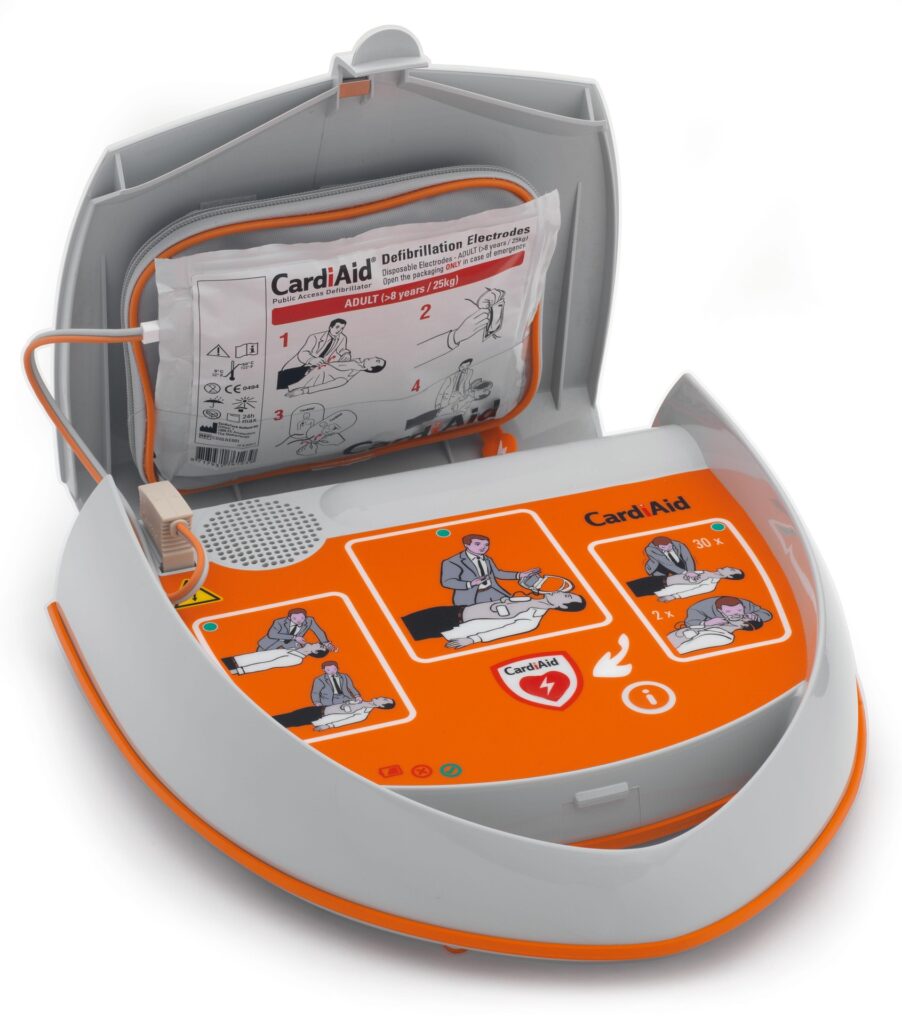
During the analysis phase, I thoroughly examine your company and analyse it using a holistic approach: financial situation and its causes, structure, processes, strategy and market. Immediate, medium-term and long-term measures are developed. That is the duty.
Phase 3 is the freestyle, where the right team is now at work, the immediate measures have already been initiated, and the further necessary steps are gradually being taken.
The final stabilisation phase is crucial for sustainable success. One of the biggest mistakes in a restructuring programme is to return to business as usual after a successful turnaround. However, strategic support and the establishment of permanent management are required.
Although it is always possible to turn things around, even in situations that seem hopeless, unfortunately there is a point of no return for every company.
Don’t wait until it’s too late!


Successful crisis management requires not only solid training, professional expertise and years of experience in corporate management, but also a wide range of soft skills, in particular experience in project management, change management and transformation.
The three most important questions are:
Where do the profits come from?
What causes losses?
How much (cash) is left at the end of the day?
With the necessary know-how and practical experience, I can restructure your company.


Fraudulent acts cause crises just as much as incompetent managers and external factors. The good news is that detecting them is relatively easy compared to developing a new strategy in a difficult market environment or getting a sluggish team back on track.
If you suspect that this issue could be relevant to your company, or if you simply want to be on the safe side, please contact me. Thanks to numerous recent assignments, I have gained a great deal of practical experience in fraud detection in addition to my work with the latest tools.
Fraudulent activities have always been commonplace in the business world. While motives such as greed, power and status have hardly changed over the years, the methods used are becoming increasingly brazen and complex. This requires the ongoing development of tools to detect fraudulent practices.
The latter range from balance sheet manipulation and false entries to fictitious invoices to friends or phantom suppliers, to the direct siphoning off of liquid funds and kickback payments.

The Fraud Triangle describes the factors that encourage fraud in companies. Incentive and pressure (1) on the perpetrator within a company structure that, due to deficiencies, offers an opportunity (2) for manipulation, combined with an internal justification (3) on the part of the perpetrator, lead to a high risk of fraudulent acts.
Through a special investigation of the internal environment and methods such as data analytics, journal entry testing, process mining and other analytical techniques from my practice, I can help you detect or prevent fraud in your company.


Contact me without obligation via e-mail, telephone, WhatsApp, LinkedIn or this contact form.
